Summary: a personal reflection on the devastating New Year’s fire at Le Constellation in Crans-Montana, highlighting the life-saving work of the CHUV’s unique cell production laboratory in Épalinges and the victims’ fortunate access to advanced burn treatment in Switzerland.


The Crans-Montana tragedy: vital work at a nearby laboratory on the hills


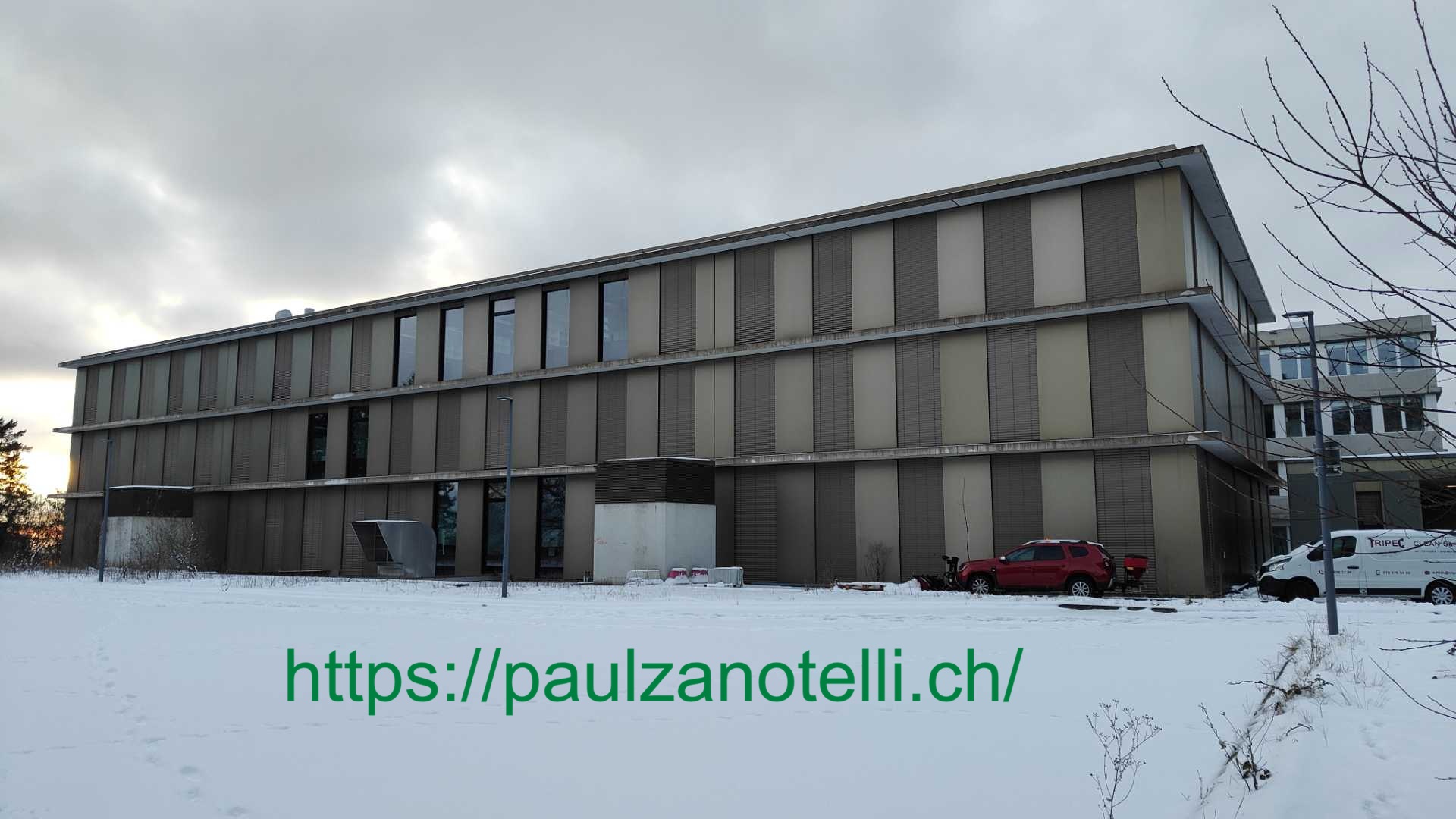
Building C of Centre laboratoires Épalinges, Lausanne, 11 January 2026
[A presentation of the building in French]


Note: this blog post was synthesised from the articles listed below (in ‘References’), which were published last week in French-speaking Swiss media. I have used Grok with a series of prompts to adapt the factual content to reflect my own personal connection to the tragedy; all anecdotes included are real.

All my prayers and thoughts are with the victims, their families and everyone affected by this heart-breaking tragedy.


Roughly a kilometre away from my home, about 40 metres higher up on the hills of Lausanne in Epalinges, lies the Centre de production cellulaire of the Centre hospitalier universitaire vaudois (CHUV). This unassuming laboratory, the only one of its kind in Europe,[2] has suddenly found itself at the heart of the medical response to a tragedy that unfolded over 100 kilometres away in Crans-Montana.

On 1 January 2026, a devastating fire tore through the bar ‘Le Constellation’, leaving dozens with life-threatening burns, many covering more than 60% of their bodies.[2] Living so close to the CHUV’s specialist facility, this disaster has struck me with particular force – not only because so many of the victims are young, but because of painful personal echoes that have made the event feel inescapably close. My mother had repeatedly voiced a strong, uneasy premonition about the New Year celebrations only a few hours earlier as she warned me of an impending catastrophe; I brushed it aside, thinking that such feelings were common around the festivities, although I now wish that I had pressed her for more detail about this diffuse ill-foreboding of hers. Then came the chilling near-misses: the daughter of one of my closest friends passed right in front of the bar but did not go inside because of the queue and the price. My father also mentioned that my niece had been there on previous visits. Even a colleague from work, who lives in Ticino and had no idea that the tragedy had occurred, arrived in Crans-Montana for a planned visit only to get the shock of his life on the first day of the year. Today, my barber told me that he personally knows the parents of two of the severely burnt teenagers – one aged 16, the other 17, with the 17-year-old having had to undergo limb amputations. These threads, stretching across our small country and now reaching into everyday conversations, have left me deeply shaken and heightened my attention to the quiet, urgent work now unfolding nearby.

Licensed by Swissmedic, the centre normally treats only 15 to 25 severe burn cases each year,[2] including requests from across Europe. Yet in the hours after the fire, it received at least 11 skin samples from victims, with more expected.[3] This unprecedented influx has stretched the small team to its limits.

The process they carry out is extraordinary: from a tiny biopsy of each patient’s remaining healthy skin, biologists cultivate sheets of epidermis in sterile conditions. Within two to three weeks, these become thin, translucent, flexible grafts capable of covering up to 2,600 cm², roughly the surface area of an adult’s back.[1] Because the tissue is autologous, there is no risk of rejection, and the grafts become permanent, even though they lack full skin features such as pores or hair.[2]

Staff have spoken of the emotional weight of processing so many samples from young victims at once, yet they mobilised immediately and voluntarily. Stéphanie Droz-Georget, head of production, has described the team’s steadfast commitment amid overwhelming demand.[5]

It is worth pausing to reflect that the young people affected in Crans-Montana are fortunate to have access to this world-class specialised care so close at hand. In regions enduring armed conflict – such as Gaza, Ukraine or Russia – children, teenagers and others who suffer comparable devastating burns often face immense barriers to receiving similar advanced treatment.

This heart-breaking event has brought rare attention to a little-known gem of Swiss medicine right on my doorstep. For the victims facing lifelong challenges, the centre offers not just survival, but real hope. As recovery begins, the dedication of these scientists reminds us that compassion and expertise often work silently, yet powerfully, in the places closest to us.

References (in French)
[1] https://archive.ph/TXTQX 
[2] https://archive.ph/ru5W9 
[3] https://archive.ph/pH9sg 
[4] https://archive.ph/1RpZW 
[5] https://archive.ph/HzSrG 

Burn treatments at CHUV

[PDF] Simon Badoud - Université de Fribourg
https://perso.unifr.ch/eric.rouiller/assets/files/THESE-MASTERS/s.badoud-thesis.pdf
(Directly references the centre de production cellulaire at CHUV, Épalinges, in the context of culturing procedures.)

Cell therapies for skin regeneration: an overview of 40 years of ...
https://www.smw.ch/index.php/smw/article/download/2619/4144?inline=1
(Focused on CHUV’s long experience with autologous and allogeneic progenitor cells for burn patients.)

Healing severe burn victims - Lausanne University Hospital
https://www.lausanneuniversityhospital.com/healing-severe-burn-victims
(Directly about CHUV’s pioneering work with biological bandages and cultured skin for burn victims.)

[PDF] Autologous skin cells from the factory.
https://www.euroclonegroup.it/documents/news/Dr_Brunet_interview.pdf
(Interview centred on CHUV’s cell production facility for severe burns.)

Summary of different cell therapies used at the CHUV Burn Centre.
https://www.researchgate.net/figure/Summary-of-different-cell-therapies-used-at-the-CHUV-Burn-Centre_tbl1_333205447
(Explicitly a summary of therapies at the CHUV Burn Centre.)

Burn Wound Treatment-From the Clinic to the Lab and Back
https://policycommons.net/artifacts/1658637/burn-wound-treatment-from-the-clinic-to-the-lab-and-back-prof/2390287
(References CHUV burn centre’s practices and output.)


Lausanne, the above was published on the twelfth day of the first month of the year two thousand and twenty-six.